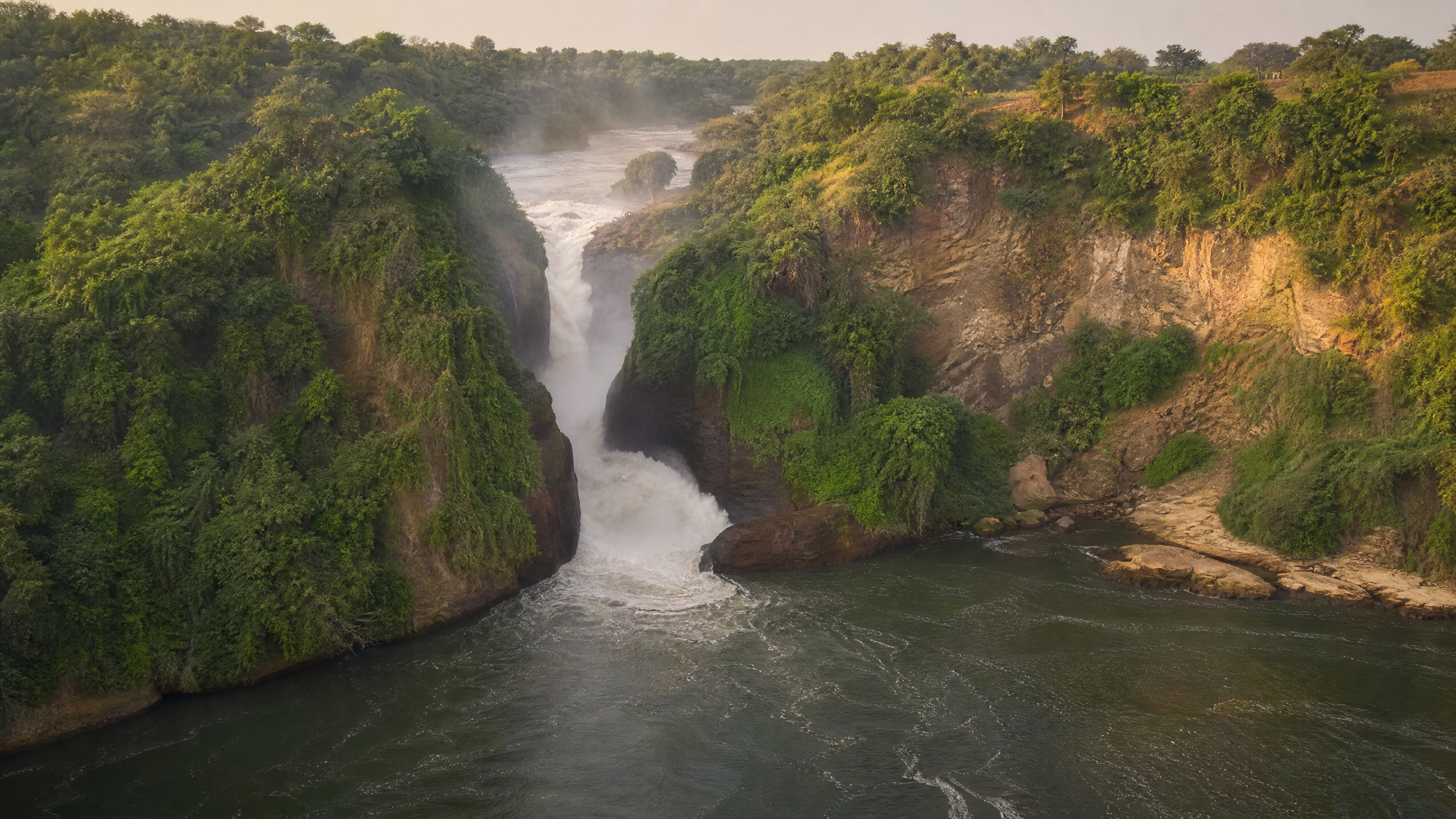
Most visitors arrive already knowing the falls as Murchison Falls. Fewer know the name is barely a century and a half old, or that the water carried a different name, spoken by people who actually lived along it, for far longer before that.
In 1864, the British explorer Samuel Baker became one of the first Europeans to lay eyes on the falls, and named them for Sir Roderick Murchison, then president of the Royal Geographical Society in London, an honor extended to a man who never once set foot in Uganda. The same expedition saw Baker name the nearby lake Albert, after Prince Albert, Queen Victoria's late husband.
Long before Baker's boat ever reached this stretch of river, the falls already carried a name: Kabalega Falls, honoring Omukama Kabalega, the nineteenth-century king of Bunyoro who met British colonial expansion with open resistance rather than accommodation. The lake carried its own older name too, Mwitanzige, the locust killer in the Runyoro language, drawn from a local account of a plague of locusts that tried the crossing and never reached the far shore.
Both sets of names have outlived their moment. The colonial names hold the maps and most of the travel writing; the older names hold the region itself, spoken locally with a weight the newer ones have never quite earned. Guides and staff at the lodge move between the two without much ceremony, the way anyone does with a place they actually know rather than one they're merely passing through. Ask, and you'll usually get the fuller story, not just the name on the sign.
Read more about the place in the Destination page, and the About page for the lodge's own history on this same ground.